Who needs to make gravy? That's exactly what the juices are there for!!
Come on Nigella...domestic goddess? Give me a break. This has got to be the most feeble piece of programming for a long time in the world of cookery. Here are some of the reasons a quick straw poll generated for removing La Lawson from our screens
- She's pretending to cook in a house that's her own
- She's plastic and not real
- She's condeming her children to a life of misery labelled as the offspring of someone who can't be bothered.
It would be better if she called it "the lazy bitch guide to the kitchen". It's not even nutritious.
What's more: why is there only one emotion? "Polite greedy lust of a mumsy kind" or does anyone really like her?
Monday, 22 October 2007


Tuesday, 2 October 2007
Welcome newcomers
Welcome to all the new FM members. Onwards and upwards and bring on the regular events.
Sunday, 6 May 2007
Collapsing (new) Buildings - A musical awakening
They're one of those bands I've always been aware of, but always been scared to try. Basically one of those bands where there's no safe album and not always anyone around to recommend one. That all changed when I saw them - Einstuerzende Neubauten - at All Tomorrow's Parties at Minehead in Somerset last month. Absolutely brilliant in every way: the material, the performance, the atmosphere the music creates...
Clip of "Sabrina" from ATP Clip on youtube
Clip of "Sabrina" from ATP Clip on youtube
Saturday, 14 April 2007
A culture toolkit - essential reading
Some things we've found helpful:
Fredric Jameson - Postmodernism, or the Cultural Logic of Late Capital
Homi Bhabha - The Location of Culture
Paul Gilroy - The Black Atlantic
Richard Florida - The Rise of the Creative Class
Roland Barthes - Empire of the Signs
Derrida - Points
Deleuze & Guattari - A Thousand Plateaus
John Carey - What Good are the Arts?
Edouard Glissant - The Poetics of Relation
Lloyd Bradley - Bass Culture
Simon Frith - Performing Rites
Tia DeNora - Music in Everyday Life
Martin Clayton (ed.) - The Cultural Study of Music
Hargreaves & North - The Social Psychology of Music
Monday, 9 April 2007
Doktor Faustus - the only novel about music worth reading?
Doktor Faustus - subtitle "The Life of the German Composer Adrian Leverkühn as Told by a Friend", is Thomas Mann's 1947 reflection on Germany, told through music. Completed during the war, while Mann was in exile in the USA, the novel is the culmination of a literary journey begun by Mann in Death in Venice, just as the short story "Tristan" was expanded to become the Magic Mountain .
This is, I reckon, the only serious novel about music. I once thought about a PhD on musical figures in literature. There's a strong German romantic tradition, with the "artist" a representative of the romantic soul, and people like E.T.A. Hoffmann - of Nutcracker fame and who also wrote a great novel about a feline (The Life and Opinions of the Tomcat Murr) - often have composers running around in their works. Then you've got things like Boris Vian and his jazz fetish or Michel Butor, the French "new novellist" who uses musical structures - the fugue etc - as a structural device. Over the pond Jack Kerouac's meanderings take him into the beat generation's musical heart and there's always Toni Morrison's Jazz . Other recent examples include Vikram Seth's An Equal Music or Iain Banks' Espedair Street.
But none of these - as far as I can see - actually talk much about music per se. Doktor Faustus does; and much more. Here it is in a nutshell:
Adrian Leverkuhn is a composer (his name is a reference to Nietzsche's injunction to "live boldly"). A musical prodigy, he soon finds out that there's little invention left available to an artist - the only option is recycling / parody and so on. Frustrated, he sells his soul to the Devil (the Faustian pact) and finds the breakthrough - in essence the 12-tone system. Of course it's not quite that simple: the pact is never actually witnessed, and it's used as a parable of the history of Germany and as a reflection on the creative process - "music as paradigm of Art". The whole book is marvel of intertextual allusions (characters based on Niezsche's lovers for example) and the musical descriptions and analysis are authentic: Mann tried out many of his ideas with Schoenberg and Adorno, for example. Ultimately the tale - a heartfelt reflection on the fate of Germany and of the artist - is also a moving one.
The narrative structure of the novel, which is written from the point of view of Leverkuhn's friend after his death, is said by Umberto Eco to have been the inspiration for The Name of the Rose .
Having said all this, it can be fairly hard going and Mann's occasionally turgid style is not to all readers' tastes. You possibly also need to care about, or be willing to plough through 50-page sections on subjects such as: why Beethoven opus 111 has no last movement, the origins of polyphony, the German psyche and so on. There's also the issue of translation - Lowe-Porter's 1948 version is probably stiffer than Mann himself intended, though dating is partly to blame. I've not read the 1997 translation by Woods, but it's probably worth plumping for, if you're not worried about whether some of the Old High German passages have been rendered sympathetically.
If none of this seems too off-putting I can't think of a novel more rewarding once you've put in the groundwork. The description my tutor at Bristol offered - "endlessly fascinating" - has always seemed to sum it up nicely.
This is, I reckon, the only serious novel about music. I once thought about a PhD on musical figures in literature. There's a strong German romantic tradition, with the "artist" a representative of the romantic soul, and people like E.T.A. Hoffmann - of Nutcracker fame and who also wrote a great novel about a feline (The Life and Opinions of the Tomcat Murr) - often have composers running around in their works. Then you've got things like Boris Vian and his jazz fetish or Michel Butor, the French "new novellist" who uses musical structures - the fugue etc - as a structural device. Over the pond Jack Kerouac's meanderings take him into the beat generation's musical heart and there's always Toni Morrison's Jazz . Other recent examples include Vikram Seth's An Equal Music or Iain Banks' Espedair Street.
But none of these - as far as I can see - actually talk much about music per se. Doktor Faustus does; and much more. Here it is in a nutshell:
Adrian Leverkuhn is a composer (his name is a reference to Nietzsche's injunction to "live boldly"). A musical prodigy, he soon finds out that there's little invention left available to an artist - the only option is recycling / parody and so on. Frustrated, he sells his soul to the Devil (the Faustian pact) and finds the breakthrough - in essence the 12-tone system. Of course it's not quite that simple: the pact is never actually witnessed, and it's used as a parable of the history of Germany and as a reflection on the creative process - "music as paradigm of Art". The whole book is marvel of intertextual allusions (characters based on Niezsche's lovers for example) and the musical descriptions and analysis are authentic: Mann tried out many of his ideas with Schoenberg and Adorno, for example. Ultimately the tale - a heartfelt reflection on the fate of Germany and of the artist - is also a moving one.
The narrative structure of the novel, which is written from the point of view of Leverkuhn's friend after his death, is said by Umberto Eco to have been the inspiration for The Name of the Rose .
Having said all this, it can be fairly hard going and Mann's occasionally turgid style is not to all readers' tastes. You possibly also need to care about, or be willing to plough through 50-page sections on subjects such as: why Beethoven opus 111 has no last movement, the origins of polyphony, the German psyche and so on. There's also the issue of translation - Lowe-Porter's 1948 version is probably stiffer than Mann himself intended, though dating is partly to blame. I've not read the 1997 translation by Woods, but it's probably worth plumping for, if you're not worried about whether some of the Old High German passages have been rendered sympathetically.
If none of this seems too off-putting I can't think of a novel more rewarding once you've put in the groundwork. The description my tutor at Bristol offered - "endlessly fascinating" - has always seemed to sum it up nicely.
Friday, 6 April 2007
Fiction - top picks
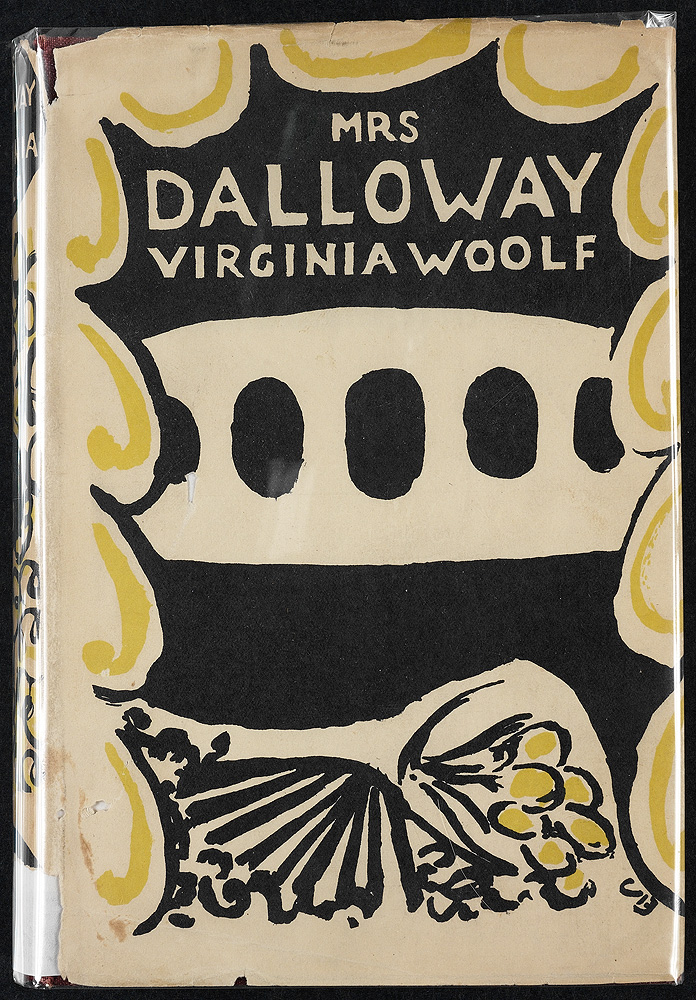 Claudia
 Woolf, Mrs Dalloway
X - Y
Y-Z
A-B
B-C
w
w
w
 Dr Nick
Thomas Mann - Doktor Faustus
Patrick Chamoiseau - Texaco
Nicholson Baker - The Mezzanine
Franz Kafka - In the Penal Colony
Jorge Borges - Labyrinths
Marguerite Duras - Moderato Cantabile
Vladimir Nabokov - The Eye
John Fowles - The Magus
Patrick Suskind - Perfume
Katherine Raymond Queneau - The Blue Flowers
Jean Potocki - The manuscript found in Saragossa
Italo Calvino - The baron in the trees
James Ellroy - American Tabloid
John Fante - Bandini
Matthew Lewis - The monk
Carson McCullers - The heart is a lonely hunter
w
w
w
w
w
Subscribe to:
Comments (Atom)